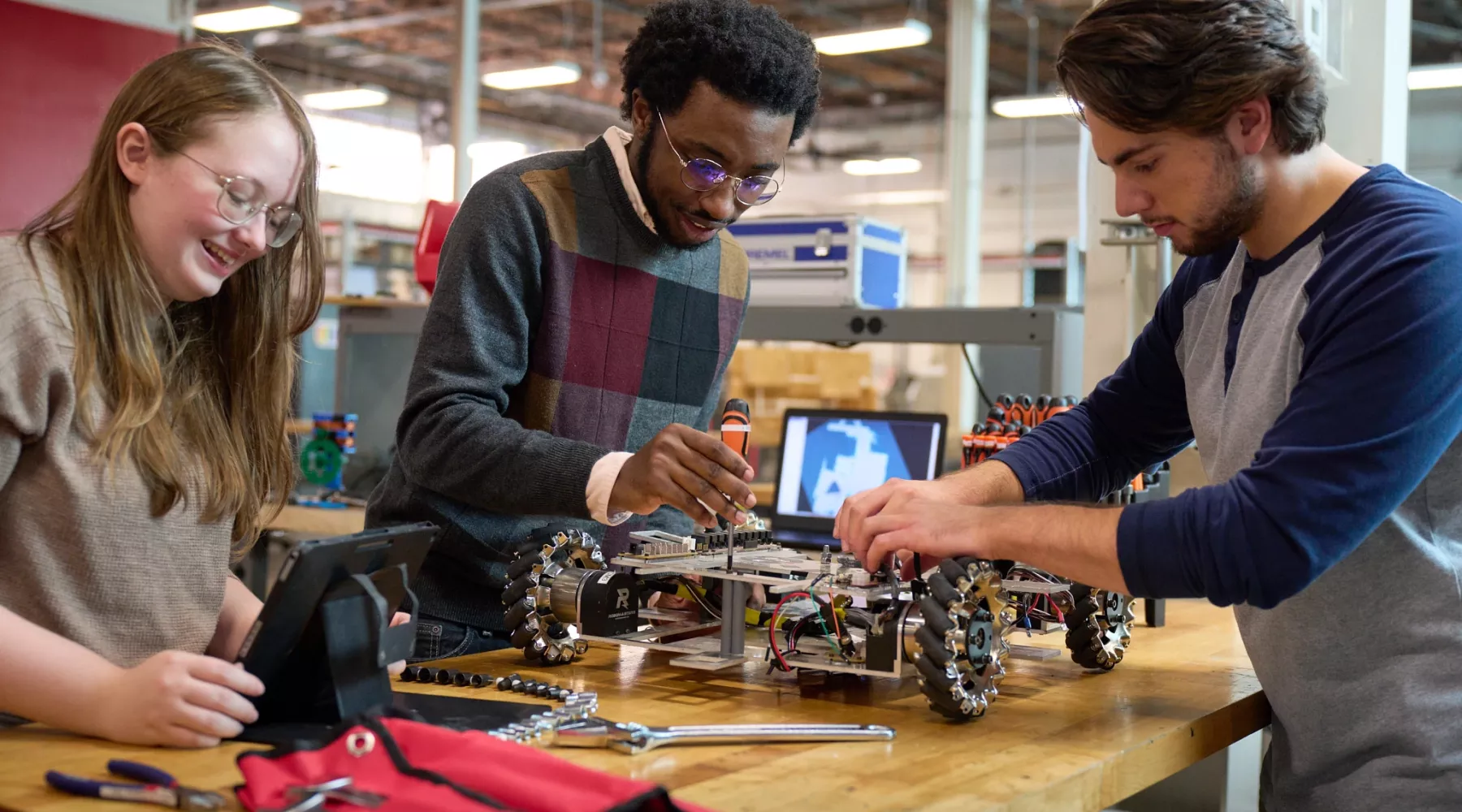
Developing Essential Skills
What are the 10 Essential Skills?
In 2021, the Kentucky Council on Postsecondary Education (CPE) identified 10 Essential Skills* they believe are critical for graduates to thrive post-graduation. The CEL is focused on students developing Essential Skills through participation in engaged learning.
| ESSENTIAL SKILL | DESCRIPTION |
|---|---|
| 1. Communication | Communicate effectively by listening, weighing influencing factors, and responding accurately and professionally. Express thoughts coherently in writing, orally, and in formal presentations. |
| 2. Critical and Creative Thinking | Think critically by evaluating assumptions and assessing information to make informed conclusions. Think creatively by combining ideas in original ways or developing new ways of addressing issues. |
| 3. Quantitative Reasoning | Hone ability to provide solutions guided by data and choose the best methodologies for arriving at informed conclusions. |
| 4. Interpersonal Relations | Demonstrate both self-awareness and appreciation of people with different perspectives, as well as the ability to collaborate, communicate, and work respectfully with others. |
| 5. Adaptability & Leadership | Accept change and find effective ways to work and thrive in different settings. Motivate others in the pursuit of a common goal and coach others in the pursuit of this goal. |
| 6. Professionalism | Adhere to the code of ethics in chosen profession and act with honesty and fairness. Prioritize tasks, manage time, take initiative, and demonstrate accountability and reliability. |
| 7. Civic Engagement | Engage in political, social, and other activities to address issues that benefit society. |
| 8. Collaboration and Teamwork | Collaborate with colleagues, become effective team members, and manage conflict. |
| 9. Knowledge Application | Articulate and apply theoretical content of academic preparation with relevant knowledge and abilities essential to chosen career. |
| 10. Information Literacy | Identify, evaluate, and responsibly use information needed for decision making. |
Develop Skills through Engaged Learning
By participating in a range of engaged learning experiences—including internships, study abroad, capstone projects, community engagement, and more—students build essential skills for academic, personal, and professional growth.
Essential Skills that may be developed through an internship or co-op experience include:
Communication
- Interns regularly write emails, reports, and present ideas; they also participate in meetings and practice professional communication.
Critical & Creative Thinking
- Interns are often tasked with solving real workplace problems, analyzing data, and thinking creatively to support team projects.
Quantitative Reasoning
- Depending on the field, interns may work with budgets, spreadsheets, metrics, or performance data to make decisions or inform recommendations.
Interpersonal Relations
- Internship and co-op experiences expose students to various teams, clients, or communities, helping them learn how to collaborate across differences.
Adaptability & Leadership
- Interns must quickly learn new systems, respond to feedback, and support team goals—often in fast-paced, evolving environments.
Professionalism
- Internships are designed to model real workplace expectations. Interns must manage time, act ethically, follow protocols, and take initiative.
Collaboration & Teamwork
- Interns frequently join team meetings or group projects, helping them develop collaboration, listening, and conflict resolution skills.
Knowledge Application
- Internships bridge theory and practice. Students apply what they've learned in class—like technical knowledge, research methods, or writing—on the job.
Information Literacy
- Interns are often expected to gather, evaluate, and apply information from reports, databases, or project briefs to inform their tasks.
Essential skills that may be developed through studying abroad or completing an ISLP include:
Communication
- While abroad, students practice verbal and non-verbal communication often across language barriers, and develop confidence in expressing ideas clearly and professionally.
Critical & Creative Thinking
- Navigating a new country requires problem-solving, flexibility, and creative thinking—whether dealing with logistics, cultural norms, or academic challenges.
Interpersonal Relations
- One of the core strengths of study abroad and ISLP is exposure to different cultures, ideologies, and perspectives which enhances empathy and understanding.
Adaptability & Leadership
- Students face unfamiliar environments, new routines, and different educational systems, helping them become more adaptable and resilient.
Civic Engagement
- Many programs include service components, global issue exploration, or cultural immersion, encouraging students to reflect on global citizenship and social responsibility.
Collaboration & Teamwork
- Group projects, homestay dynamics, or working with international classmates develop teamwork and cross-cultural collaboration skills.
Knowledge Application
- Students often connect coursework to international contexts, gaining new insights and applying academic knowledge in real-world global settings.
Information Literacy
- Making travel, academic, and cultural decisions in unfamiliar contexts sharpens students’ ability to evaluate, select, and use information responsibly.
Essential skills that may be developed through completing a capstone project include:
Communication
- Students deliver presentations, write formal reports, and engage in professional communication with peers, faculty, and often external stakeholders when completing a capstone project.
Critical & Creative Thinking
- Capstone projects require students to identify problems, analyze data or case studies, evaluate options, and often propose original solutions.
Quantitative Reasoning
- Many capstone projects involve data collection and analysis, budgeting, or use of quantitative tools depending on the discipline.
Interpersonal Relations
- In team-based or community-facing capstone projects, students engage with various collaborators, clients, or populations, fostering strong communication.
Adaptability & Leadership
- Capstone projects often include unexpected challenges that require adaptability, leadership, and collaboration to adjust plans and stay on track.
Professionalism
- Capstone projects mirror professional environments with deadlines, accountability, project management, ethical considerations, and real-world standards.
Civic Engagement
- Many capstone projects focus on community issues, policy, or nonprofit initiatives, giving students a platform to make meaningful societal contributions.
Collaboration & Teamwork
- Group capstone projects demand teamwork, project coordination, conflict resolution, and shared responsibility for outcomes.
Knowledge Application
- Capstone projects are designed to synthesize and apply the student’s major coursework in a practical context.
Information Literacy
- Students must gather, evaluate, and synthesize research, stakeholder input, and technical data to inform their decisions and recommendations with their capstone projects.
Essential skills that may be developed through participating in community engagement activities include:
Communication
- Students must communicate clearly and respectfully with community members, often adapting messages for various audiences and settings.
Critical & Creative Thinking
- Community work requires understanding real-world challenges, identifying root causes, and collaborating on creative solutions.
Interpersonal Relations
- Students work with individuals and groups who may differ in culture, identity, or lived experience.
Adaptability & Leadership
- Community settings can be unpredictable; students often adapt to new roles, shifting needs, and real-time feedback while supporting shared goals.
Professionalism
- In working with organizations, nonprofits, or community leaders, students learn to act with integrity, reliability, and professionalism.
Civic Engagement
- Students explore civic responsibility and social change by participating in service, advocacy, or community-based projects.
Collaboration & Teamwork
- Whether working with classmates or community partners, students build teamwork, communication, and coordination skills.
Knowledge Application
- Students often bring course concepts (e.g., public health, education, business) into practical community contexts, applying theory to service or research.
Information Literacy
- Students gather community data, assess needs, and use information from multiple sources to shape their actions and recommendations.
Essential skills that may be developed through completing an undergraduate research experience include:
Communication
- Students learn to clearly explain complex ideas in writing, presentations, and discussions—often preparing abstracts, posters, or scholarly papers.
Critical & Creative Thinking
- Research requires critical thinking to define problems, evaluate sources, interpret data, and form evidence-based conclusions.
Quantitative Reasoning
- Many research projects involve data analysis, statistical reasoning, or quantitative modeling to support findings.
Interpersonal Relations
- Research often includes collaboration with faculty, peers, or community participants, broadening interpersonal and intercultural understanding.
Adaptability & Leadership
- Research doesn’t always go as planned—students learn to troubleshoot, pivot methodologies, and persist through setbacks.
Professionalism
- Undergraduate researchers are held to high standards of ethics, responsibility, time management, and academic integrity.
Collaboration & Teamwork
- Many research projects are team-based or lab-based, fostering collaboration, peer learning, and shared accountability.
Knowledge Application
- Students apply disciplinary knowledge, methodologies, and theories in a real-world or scholarly setting.
Information Literacy
- Research demands locating, evaluating, and synthesizing credible information.

"My engaged learning experience allowed me the chance to know I can accomplish my goals, gain confidence, and have the ability to learn new skills."